Keeping kitchen knives sharp is essential for safety, speed, and precision. According to expert chefs and blade specialists, the right sharpening technique not only boosts performance but also significantly reduces the risk of injury. This guide brings together expert-backed advice on maintaining razor-sharp edges, explains key methods like whetstone sharpening and electric options, and clarifies the important distinction between honing and sharpening. With skillful care, kitchen tools last longer and deliver better results with every meal.
Why do kitchen knives need sharpening less frequently today?
Thanks to modern materials and advanced manufacturing, today’s kitchen knives are built to maintain their cutting edge for longer periods. High-quality steels and improved grinding techniques help ensure that blades stay sharper between maintenance sessions. As a result, home cooks find themselves needing to sharpen their knives far less often, as long as proper care routines are followed.
Using appropriate cutting surfaces—such as wood or plastic boards—protects the blade from unnecessary wear. Hand-washing knives instead of running them through the dishwasher further extends edge life. When these habits are paired with regular honing, metal fatigue is minimized and knives remain sharp without frequent sharpening.
Understanding honing vs. sharpening
Many people confuse honing with sharpening, yet each process serves a different purpose in knife maintenance. Understanding when to hone and when to sharpen leads to healthier blades and easier food prep.
The role of honing in daily care
Honing realigns the microscopic fibers along the blade’s edge using a honing steel. Experts recommend making honing a part of the daily kitchen routine—even before each use—to quickly restore alignment. Since this process does not remove significant amounts of metal, it is safe for frequent repetition and helps keep knives performing at their best.
By regularly honing, one can avoid unnecessary sharpening and extend the intervals between more aggressive cutting edge restoration. This step preserves both the lifespan and performance of the blade, ensuring clean and controlled cuts during daily tasks.
When sharpening becomes necessary
Sharpening, unlike honing, involves removing a small amount of metal to create a fresh, keen edge. Over time, even well-maintained knives lose their bite due to heavy use or mishandling. Sharpening restores the blade’s sharpness, but because it thins the blade, it should be done sparingly. Most home cooks only need to sharpen their knives every few months if consistent honing is practiced.
Selecting the right tool for blade sharpening depends on skill level, available time, and the desired outcome. Both manual and electric methods have distinct advantages worth considering.
Whetstone sharpening versus electric sharpeners: which should be chosen?
The choice of sharpening device greatly influences both the process and final results. Manual sharpening, especially with a whetstone, offers unique benefits and requires a different approach than electric sharpeners.
Precision and control with a whetstone
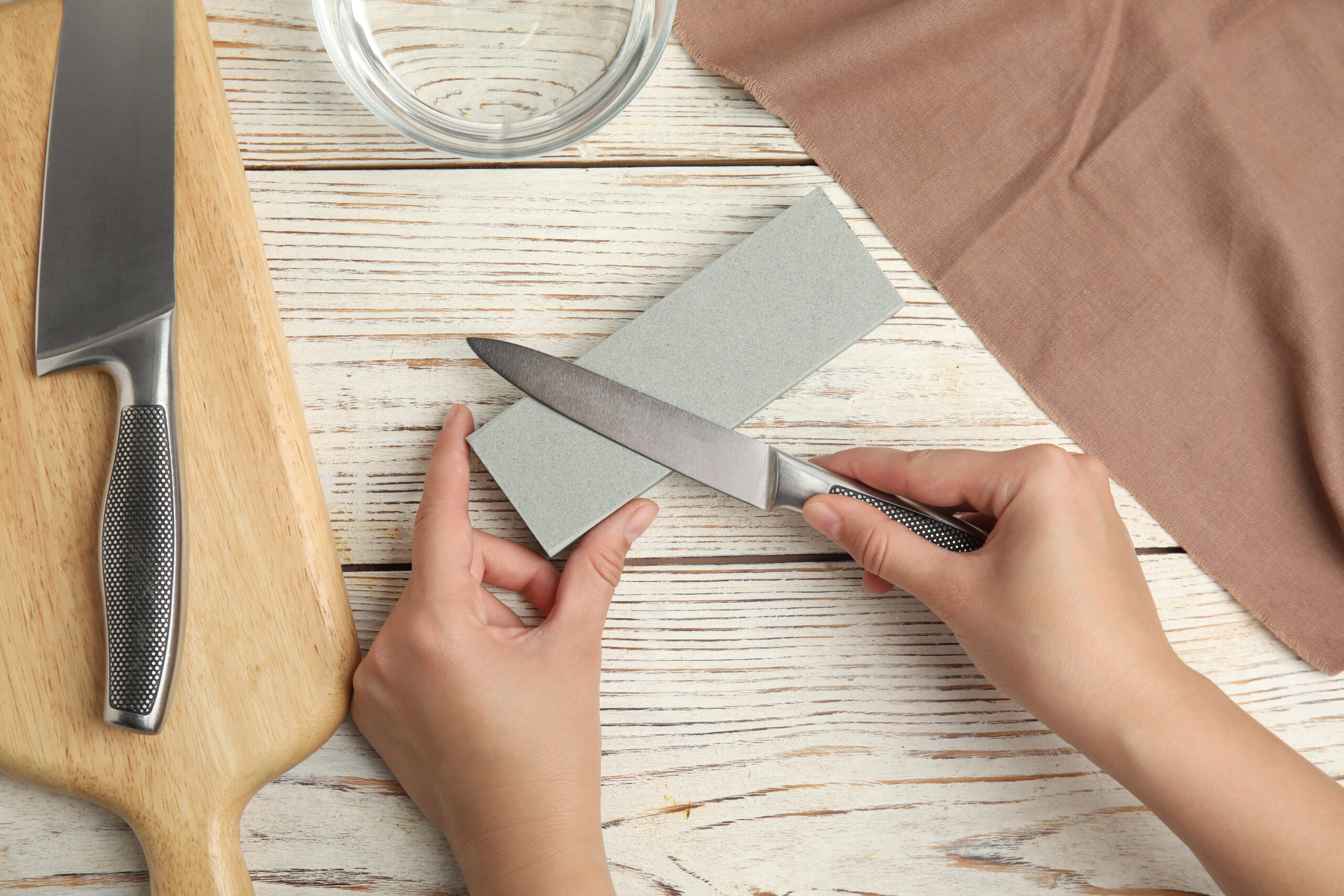
Experts value whetstone sharpening for its customization and fine-tuned control. Using a whetstone allows precise adjustment of angle, pressure, and motion, relying on steady hands and attention to detail. Maintaining a consistent angle—ideally around 20° for most Western-style knives—is crucial for achieving a uniform, razor-sharp edge. Mastery of pressure control and smooth blade drawing technique sets apart excellent results from average outcomes.
This manual method takes some patience, as skill and practice are needed to get it right. However, many find the learning curve worthwhile, since the results often surpass what electric sharpeners offer. Professionals typically prefer whetstones unless pressed for time.
Are electric sharpeners suitable for all situations?
Electric sharpeners provide convenience and speed, making them ideal for quick fixes or those less confident in manual techniques. With preset guides for angle maintenance, they simplify the process. However, experts warn that their rapid abrasive action can lead to faster blade wear, especially if overused. Excessive passes may thin the blade too much, reducing its lifespan.
While electric sharpeners serve well for occasional touch-ups, relying on manual sharpening methods gives users better control and prolongs blade life. Supplementing with fine grit settings can enhance results, but thorough whetstone work remains the gold standard for serious maintenance.
Mastering the proper sharpening technique for long-lasting results
Achieving professional-level sharpness depends more on mastering core habits than on owning expensive gadgets. Following these best practices ensures safer and more effective knives, no matter which method is chosen:
- Maintain a consistent angle (about 20°) throughout the process
- Use a smooth, even blade drawing technique across the entire stone or guide
- Apply gentle, steady pressure control to prevent chipping and excessive wear
- Begin with coarse grits for very dull blades, then polish with finer surfaces for maximum precision
Sticking to these principles separates refined, durable edges from jagged or uneven ones. Avoiding rushed movements and varying pressure helps prevent nicks that compromise knife safety and accuracy. Each knife may require small adjustments, but these fundamentals always yield reliable results.
After sharpening, cleaning off filings and storing knives safely—in sheaths or dedicated compartments—preserves the newly restored edge. Combining these habits maximizes both performance and longevity.
Why do sharp knives increase safety and efficiency?
Dull knives demand extra force and tend to slip, increasing the risk of accidental cuts. In contrast, sharp knives grip food immediately and move predictably, requiring less effort and delivering cleaner slices.
Efficient slicing not only speeds up meal preparation but also reduces fatigue and produces neater dishes. Whether cooking at home or professionally, diligent maintenance pays off by making kitchen work safer and more enjoyable—all made possible by understanding and practicing expert sharpening techniques.